
Introduction
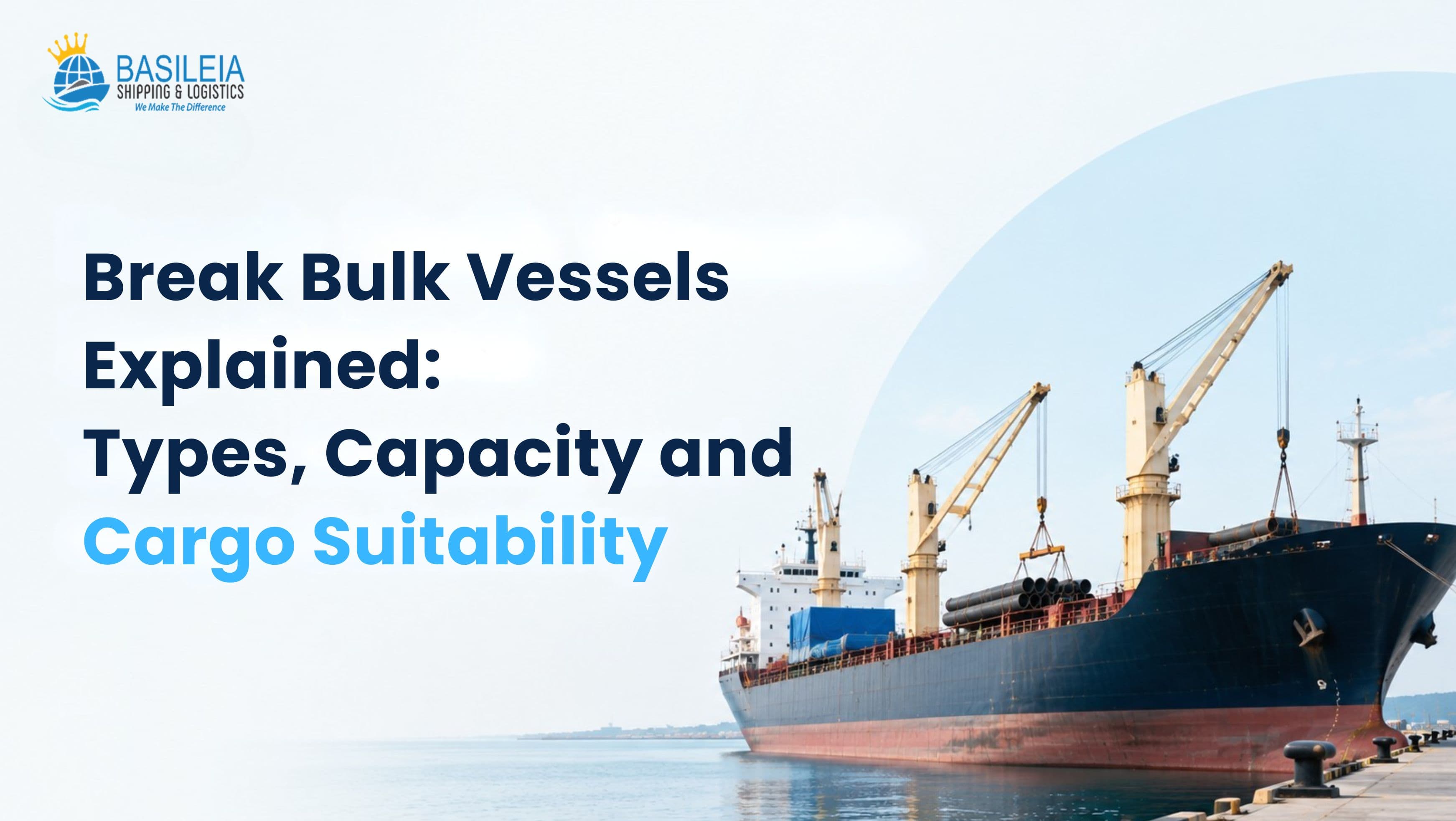
Not all international cargo is suitable for standard containers. Heavy machinery, steel products, construction equipment, vehicles, and large industrial components may need to be loaded individually. This is where a break bulk vessel becomes important. These vessels are designed to carry cargo that is packaged, bundled, palletized, or handled as individual units rather than being transported inside containers. Understanding vessel types and cargo suitability helps businesses choose the right transportation method and plan break bulk shipping more effectively.
What Is a Break Bulk Vessel?
A break bulk vessel is a cargo ship designed to transport individual pieces of freight rather than relying primarily on standardized containers. Cargo can include machinery, steel plates, pipes, timber, vehicles, construction materials, and project equipment.
Unlike container vessels, these ships are equipped or arranged to support different cargo dimensions and handling requirements. Depending on the vessel, cranes or other lifting equipment may be available for loading and unloading cargo.
For businesses moving break bulk cargo, selecting a suitable vessel depends on the cargo's weight, dimensions, quantity, loading requirements, and destination port.
Types of Break Bulk Vessels
Different vessel designs are used depending on the nature of the cargo.
1. General Cargo Vessels
General cargo vessels are designed to carry a wide variety of packaged and individual cargo. They may transport machinery, steel products, bags, pallets, crates, and other goods.
Their flexibility makes them suitable for shipments where cargo types and dimensions vary.
2. Heavy-Lift Vessels
Heavy-lift vessels are designed for extremely heavy or oversized cargo. They are commonly used for industrial machinery, generators, turbines, construction equipment, and other project cargo.
Their specialized cranes and lifting systems allow them to handle cargo that would be difficult to load using conventional equipment.
3. Multipurpose Vessels
Multipurpose vessels can accommodate different types of cargo, including break bulk, project cargo, and sometimes containers. They offer flexibility for businesses that need to move several cargo types within the same shipment.
4. Ro-Ro Vessels
Roll-on/Roll-off vessels are particularly suitable for wheeled cargo. Vehicles, trucks, trailers, agricultural machinery, and construction equipment can be driven directly onto the vessel using ramps.
Understanding Vessel Capacity
Vessel capacity is not determined only by the total tonnage a ship can carry. Cargo dimensions, available deck space, lifting capacity, vessel stability, and loading arrangements also matter.
For example, a vessel may have sufficient weight capacity but limited space for an unusually long or wide piece of machinery. Similarly, heavy cargo may require a vessel with suitable lifting equipment and deck strength.
Therefore, businesses should provide accurate cargo specifications before selecting a vessel.
How to Choose the Right Vessel for Your Cargo
The right vessel depends on several factors:
- Cargo weight: Determines the required lifting and carrying capacity.
- Cargo dimensions: Length, width, height, and shape affect loading arrangements.
- Cargo type: Vehicles, machinery, steel, and project equipment have different requirements.
- Port facilities: The origin and destination ports must have suitable handling capabilities.
- Loading method: Cargo may require cranes, ramps, forklifts, or specialized equipment.
- Route and schedule: Vessel availability and port schedules influence transit planning.
Experienced freight forwarders in India can help businesses evaluate these factors and coordinate suitable vessel arrangements.
How Break Bulk Shipping Works
The process usually begins with cargo assessment and vessel planning. Once the appropriate vessel is identified, the shipper prepares documentation and coordinates cargo delivery to the port.
At the port, cargo is inspected, handled, lifted, and secured according to the agreed loading plan. During break bulk shipping, proper securing is particularly important because individual cargo units need to remain stable throughout the voyage.
After reaching the destination, the cargo is unloaded and moved through customs and inland transportation to the final delivery point.
Why Vessel Selection Matters
Choosing the wrong vessel can result in additional handling costs, delays, loading difficulties, or even cargo damage. A suitable vessel, on the other hand, can improve operational efficiency and make the movement of oversized or heavy goods more predictable.
This is why businesses should work closely with experienced logistics professionals before confirming a shipment.
How Basileia Supports Break Bulk Shipments
Basileia Shipping and Logistics helps businesses coordinate specialized cargo movements by considering cargo characteristics, port requirements, documentation, transportation, and delivery needs.
For break bulk cargo, careful planning is essential from the initial vessel selection through final delivery. As an experienced logistics partner, Basileia works to coordinate break bulk shipping requirements while keeping safety, timing, and cargo-handling considerations in focus.
Conclusion
A break bulk vessel provides an effective transportation solution for cargo that cannot be easily handled through conventional container shipping. From general cargo and heavy machinery to vehicles and project equipment, different vessel types offer different capabilities.
By evaluating cargo weight, dimensions, handling requirements, port facilities, and route conditions, businesses can select a vessel that fits their shipment. With support from experienced freight forwarders in India, companies can plan break bulk shipping more efficiently and move specialized cargo with greater confidence.