
Introduction
Moving oversized machinery, industrial equipment, generators, transformers, and other large components requires detailed planning before the cargo leaves its origin. Unlike standard freight, out-of-gauge shipments can face road restrictions, special permit requirements, limited port infrastructure, and complex loading conditions. Proper out of gauge transport planning helps businesses identify these challenges early and avoid costly delays. Working with experienced freight forwarders in India can also simplify coordination between carriers, ports, authorities, and project sites.
What Is OOG Cargo?
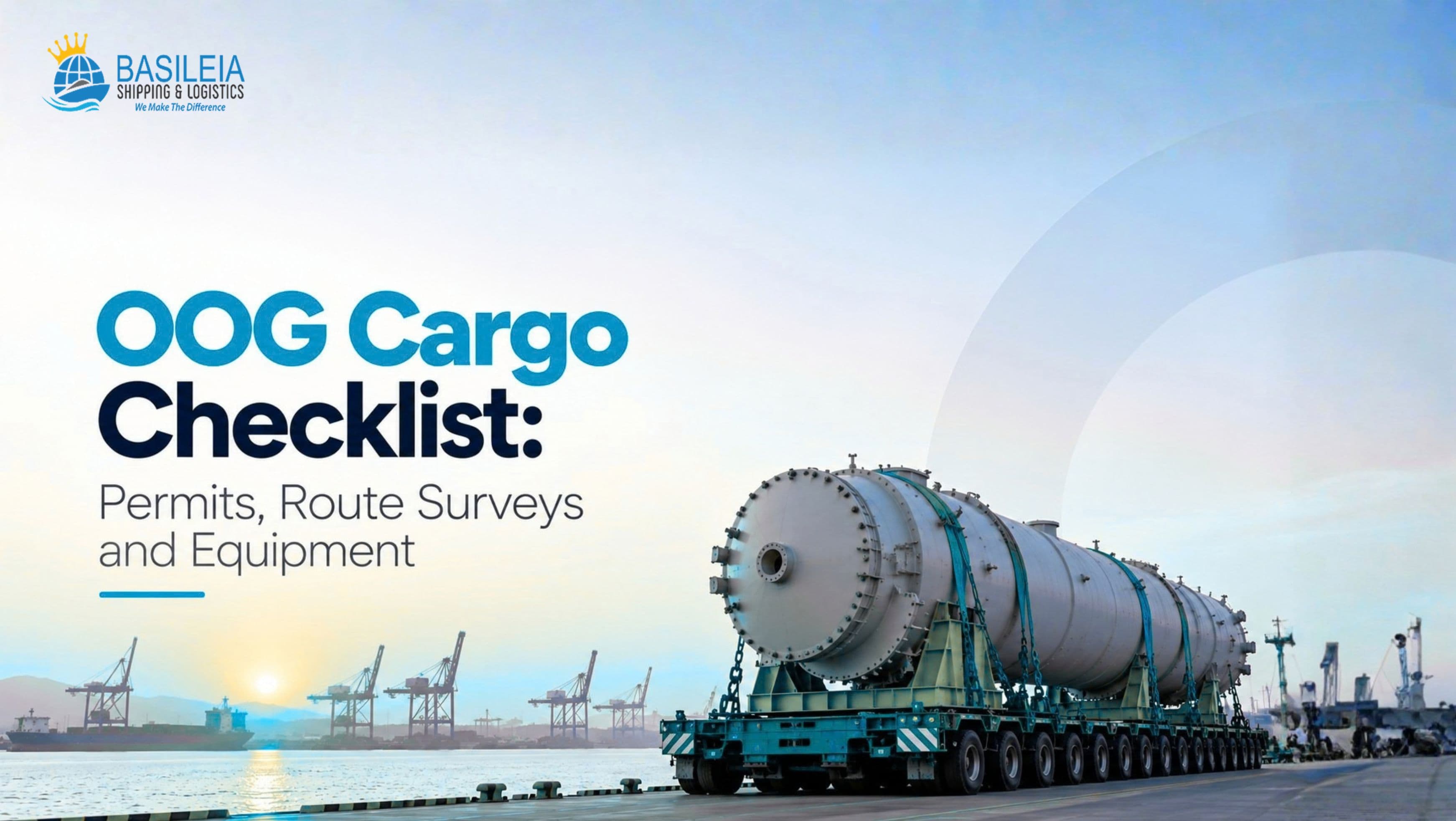
OOG, or out-of-gauge cargo, refers to cargo that exceeds the standard dimensions or weight limits of conventional containers or transportation equipment.
Common examples include:
- Industrial machinery
- Large generators and transformers
- Construction equipment
- Wind turbine components
- Boilers and pressure vessels
- Steel structures
- Large manufacturing equipment
Because these shipments can have unusual dimensions, they require customized transportation and handling plans.
OOG Cargo Planning Checklist
1. Confirm Cargo Dimensions and Weight
Start by collecting accurate information about the cargo. Measure:
- Length
- Width
- Height
- Gross weight
- Center of gravity
- Lifting points
- Packaging dimensions
Even a small difference in measurements can affect vehicle selection, route feasibility, permits, and loading arrangements.
Accurate cargo data is the foundation of safe project cargo handling.
2. Identify Required Permits
Oversized and overweight cargo may require special permissions before it can travel on public roads. Requirements can vary depending on the route, cargo dimensions, vehicle type, and local regulations.
Before transportation begins, confirm:
- Oversize and overweight permits
- Police or traffic permissions where applicable
- Escort requirements
- Port-related permissions
- Destination-specific approvals
Starting the permit process early can help prevent last-minute shipment delays.
3. Conduct a Route Survey
A route that looks suitable on a map may not be suitable for an OOG shipment. A detailed route survey can identify potential obstacles such as:
- Low bridges
- Narrow roads
- Sharp turns
- Weak bridges
- Low overhead cables
- Toll gates
- Steep gradients
- Construction zones
The survey should cover the complete route from the cargo's origin to the final project site.
For particularly large shipments, physical verification may be necessary before transportation is scheduled.
4. Select the Right Transport Equipment
The equipment should match the cargo's dimensions, weight, and handling requirements.
Depending on the shipment, transportation may require:
- Hydraulic modular trailers
- Low-bed trailers
- Extendable trailers
- Multi-axle trailers
- Heavy-duty trucks
- Specialized lifting equipment
Selecting the wrong equipment can create safety issues and increase transportation costs.
5. Plan Loading and Unloading
Loading is one of the most critical stages of project cargo handling. The logistics team should determine how the cargo will be lifted, positioned, secured, and unloaded.
Consider:
- Crane capacity
- Lifting points
- Ground conditions
- Loading space
- Cargo stability
- Securing arrangements
- Destination unloading facilities
A detailed lifting and securing plan should be prepared before the cargo reaches the loading location.
6. Coordinate Port and Ocean Transportation
For international OOG shipments, road transportation is only one part of the journey. The cargo may need to move from the manufacturing facility to a port, be loaded onto a suitable vessel, and then continue to the destination through another specialized transport arrangement.
Experienced international shipping services can help coordinate documentation, port handling, vessel arrangements, customs procedures, and destination transportation.
For complex shipments, project cargo shipping companies should also be able to coordinate different parties involved in the movement.
7. Check Documentation and Customs Requirements
Prepare all required documents before shipment. These may include:
- Commercial invoice
- Packing list
- Bill of lading
- Certificate of origin
- Customs documents
- Cargo insurance
- Technical specifications
- Special permits
Accurate documentation helps reduce the possibility of customs or operational delays.
8. Build a Contingency Plan
Even with detailed planning, unexpected issues can occur. Weather, road restrictions, equipment breakdowns, port congestion, or changes in project schedules can affect delivery.
A contingency plan should identify alternative routes, backup equipment, additional handling options, and communication procedures.
This is especially important for time-sensitive industrial and infrastructure projects.
How Freight Forwarders Help With OOG Cargo
Experienced freight forwarders in India can coordinate multiple stages of an oversized shipment rather than treating transportation as a single activity.
They can help with route planning, carrier selection, permits, documentation, port coordination, customs clearance, cargo handling, and final delivery.
For businesses managing international projects, having one logistics partner coordinate these activities can improve communication and reduce unnecessary delays.
How Basileia Supports OOG Shipments
Basileia Shipping and Logistics helps businesses coordinate complex cargo movements based on the specific requirements of each shipment. From cargo assessment and route planning to documentation, transportation, port coordination, and final delivery, each stage can be planned around the cargo's characteristics.
For businesses requiring out of gauge transport, Basileia focuses on practical coordination and careful planning to help move oversized and heavy equipment more efficiently.
Conclusion
OOG cargo requires more than simply arranging a truck or vessel. Accurate measurements, permits, route surveys, specialized equipment, proper loading procedures, documentation, and contingency planning all contribute to a successful shipment.
If you're preparing to move oversized or heavy equipment, speak with Basileia Shipping and Logistics before your shipment begins. Our team can help assess your cargo requirements, plan the transportation route, coordinate handling, and develop an end-to-end logistics solution for your project.