
Introduction
International shipping involves different methods for transporting vehicles, heavy machinery, and commercial equipment. One common method is Roll-On/Roll-Off (RoRo), which allows wheeled cargo to be driven or moved directly onto a vessel. Understanding roro shipping helps businesses choose a suitable transportation method for their cargo.
At Basileia Shipping & Logistics, we support businesses with RoRo, flat rack, breakbulk, and project cargo coordination for international shipments.
What Is RoRo in Shipping?
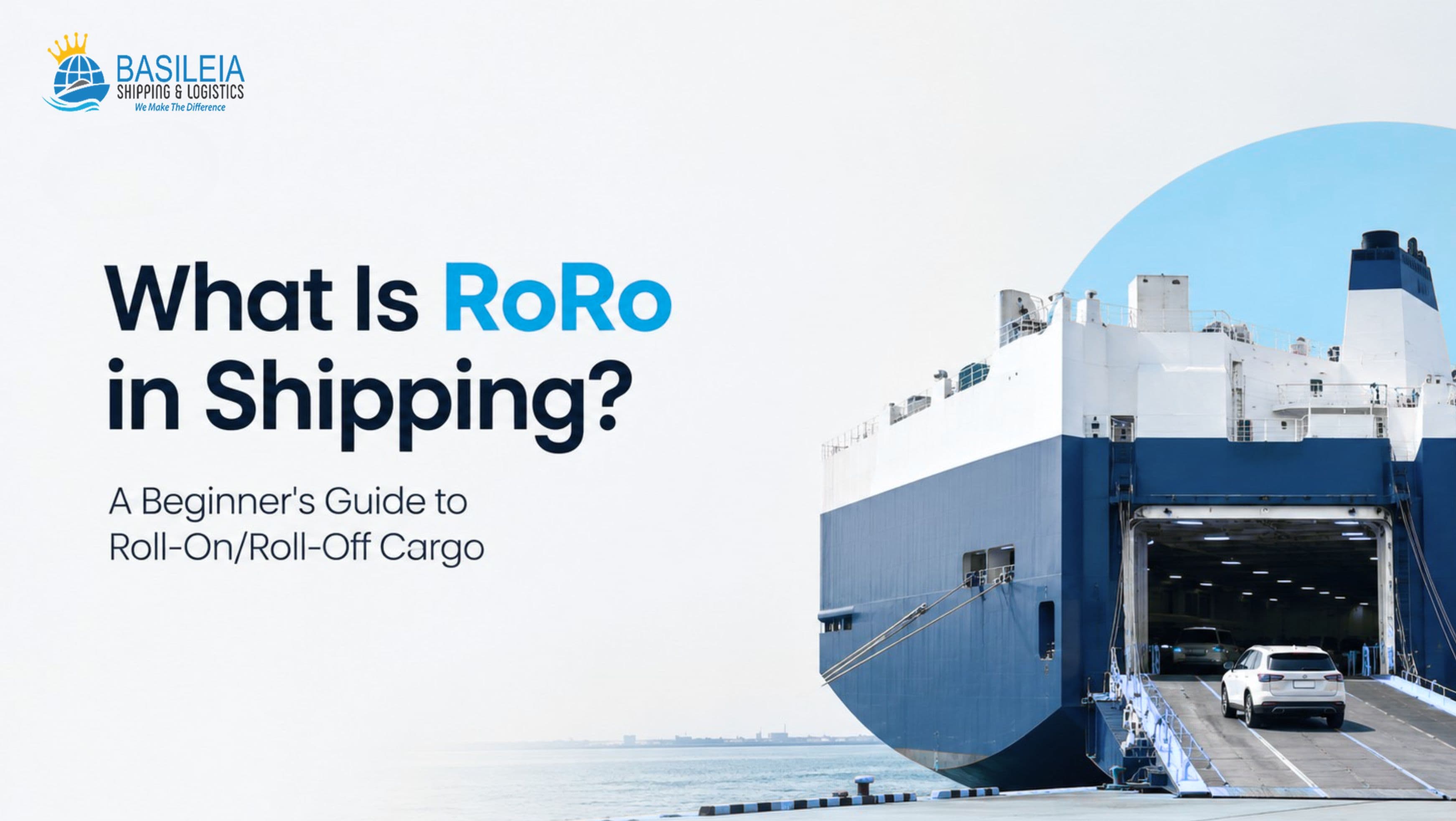
RoRo is a shipping method in which vehicles and wheeled equipment are loaded onto and unloaded from a vessel using built-in ramps. Unlike container shipping, cargo does not need to be packed inside individual containers.
Common RoRo cargo includes:
- Passenger cars and SUVs
- Trucks and buses
- Tractors and agricultural machinery
- Construction and mining equipment
- Heavy commercial vehicles
This method is especially useful for cargo that can be driven or moved using suitable handling equipment.
What Is a RoRo Terminal?
A roro terminal is a port facility designed to handle vehicles and wheeled cargo moving through RoRo vessels. These terminals typically have ramps, vehicle storage areas, cargo inspection facilities, and equipment for handling non-running or oversized cargo.
A typical terminal operation involves:
- Receiving and inspecting cargo
- Checking shipping documents
- Moving vehicles to designated staging areas
- Loading cargo onto the vessel
- Securing vehicles for the sea journey
Efficient terminal operations help reduce delays and improve cargo handling safety. Basileia coordinates with relevant port and terminal operators to support smooth shipment planning.
How Does the RoRo Shipping Process Work?
The RoRo process generally involves five steps:
- Cargo preparation: Vehicles and machinery are inspected and prepared for export.
- Booking: The shipper or logistics partner confirms vessel space and schedules.
- Terminal delivery: Cargo is transported to the designated port facility.
- Loading and transportation: Vehicles are driven or moved onto the vessel, secured, and transported.
- Unloading and delivery: Cargo is discharged at the destination and prepared for collection or onward transportation.
Experienced freight forwarders in India can help coordinate these steps, including documentation, port handling, and communication with overseas partners.
Why Choose RoRo for Cargo Transportation?
RoRo offers several advantages for suitable cargo:
- Convenient loading and unloading through vessel ramps
- Reduced need for container packing
- Efficient transportation of wheeled machinery
- Suitable handling options for many vehicles and heavy equipment
However, cargo dimensions, vessel availability, route coverage, and destination facilities should always be checked before booking.
How Basileia Supports RoRo Shipments
Basileia Shipping & Logistics provides freight forwarding and cargo coordination solutions for businesses transporting vehicles, machinery, and project cargo. As one of the freight forwarders in India supporting international cargo movements, Basileia helps customers evaluate shipping options and coordinate shipment requirements.
With its own office in Ghana and experience in international logistics, Basileia supports cargo movements involving India, West Africa, and other trade routes.
Conclusion
RoRo shipping is a practical option for transporting vehicles and wheeled machinery internationally. Understanding how a roro terminal operates and how the shipping process works helps businesses plan shipments more effectively. With suitable logistics coordination and an experienced shipping partner, exporters and importers can manage their cargo movements with greater confidence.